We help our students to think for themselves.
“Real learning takes place by what Maria Montessori would call the absorbent mind of the child. Simply absorbing their universe, absorbing it, becoming it, and they do this through play. Play can be the most serious undertaking of a child’s life. It is the most serious undertaking. Play is the most serious activity in their life because they’re literally building their construction of knowledge of the world, of themselves, of the relationship between the two and laying down all the foundations for later forms of intelligence. In all of that, play is the activity itself."
Joseph Chilton Pearce
Joseph Chilton Pearce
Social and Emotional Understanding, Development and Growth
The Guides at TCIAJ are trained, and continue to seek training, in helping students understand their emotions/actions and the emotions/actions of others. Every day at TCIAJ we reinforce kindness, empathy, and what it looks like or sounds like to help ourselves or to help others.
In knowing how a child's brain develops we know our students understand the concrete and are only beginning to understand the abstract. Because of this it is important for us to not only talk about the list below but to demonstrate it to our students, between staff, visitors, guests, and parents/guardians.
In knowing how a child's brain develops we know our students understand the concrete and are only beginning to understand the abstract. Because of this it is important for us to not only talk about the list below but to demonstrate it to our students, between staff, visitors, guests, and parents/guardians.
|
|
|
|
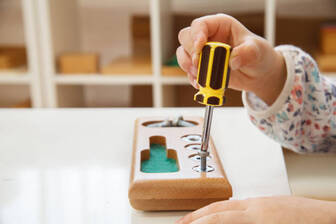
Practical Life: In this area students learn:
|
|
|
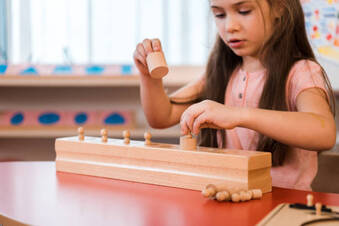
Sensorial: Each activity is created to intentionally focus on two or more senses
|
|
|
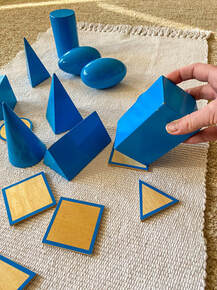
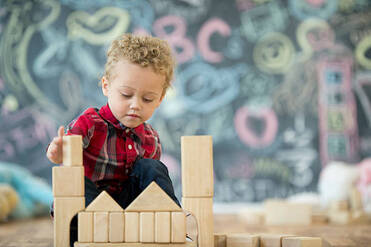
Geometry & Spatial Awareness: Each activity is designed to guide a child to a better understanding of
|
|
Students will also gain understanding through art activities and nature exploration
|
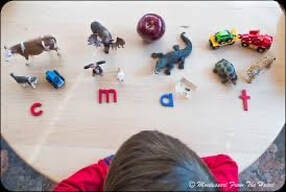
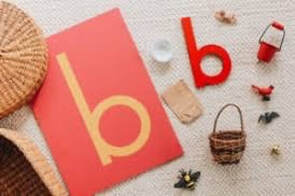
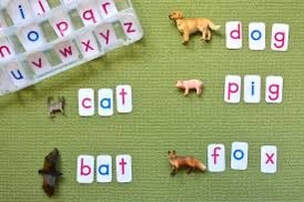
Language Arts: Children come into the world and the first way they communicate is through their eyes, next they use their mouth, then touch, then words. We foster their desire of wanting to learn more by allowing students to engage in letters and words through their innate curiosity. Students are introduced to Language activities and are then given the freedom to explore the activities more when they are ready. We do not force a child to work with any material instead we give lessons.
A Guide will let students know she is going to give a lesson. Students can come and watch the lesson or not. We encourage students who do come to watch until the end but it is not forced. If we force a child to do something they may never approach the material again or if they do there may be some negative emotions to it. |
|
As Guides we:
- Introduced the names of objects in the environment
- Provide correct terminology and clear pronunciation
- Guide children in understanding how to listen carefully to the sounds that make up words, how to enunciate correctly and how to use the words in the correct context
- Introduce sound games, classified cards, story books, outdoor nature, and poetry play
|
Mathematics
|
|
|
Art
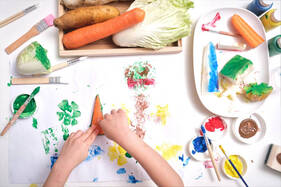
Children use and develop art through their visual, sensorial, and their emotions to develop their own artwork. Children work through the process using the vast amount of materials for creative expression. Art is part of our entire curriculum and is offered all day, every day. |
|
|
Geography is divided up into three areas: |
- The physical geography of the earth. The physical is based on real information that children can see, touch, and understand. We introduce geology by looking at the earth and its composition to provide a foundation for children to understand the concepts more fully.
- People and the different cultures in our own families, our communities, and other areas of the world.
- Political geography that includes countries and their borders.
|
Nature Based Curriculum:
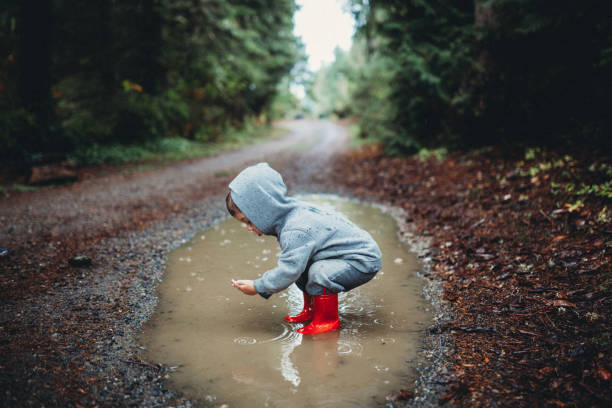
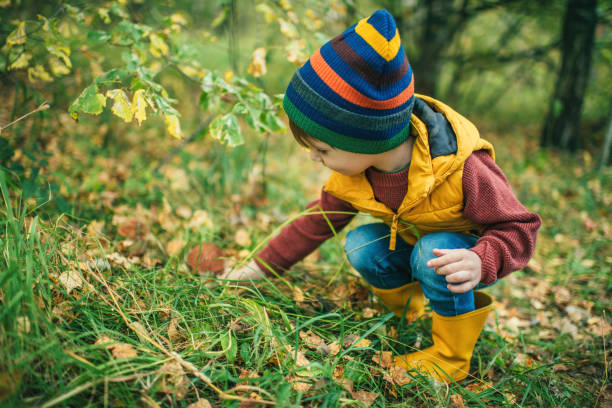
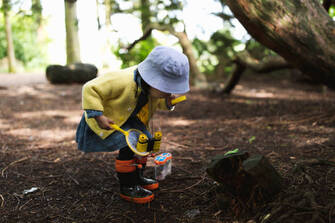
Learning occurs in the context of nature, outdoors. Nature is at the core of the afternoon curriculum where we dedicate the afternoons to implement high-quality practices along with environmental education practices through exploration. |
|
|
|
|
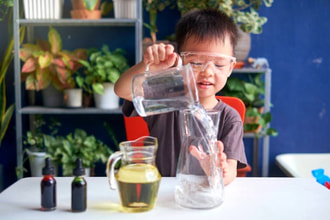
Science We introduce children to advanced topics preparing them for a lifetime of discovery. |
|
|
|
Conflict resolution:
We do not use time outs, color coded charts, rewards, or punishments to control behaviors. Children only gain an understanding of kindness and how to effectively communicate if we guide them in understanding how to work through what they are feeling and how to engage with others by teaching them the vocabulary they need in order to be understood and to understand others. We guide our students to actively think through the consequences of chosen actions in a way that they can understand. In confrontations we first validate each child's emotions then simplify the situation and then offer options to develop confidence in their ability to choose. Our teachers set clear expectations by supporting our student's thoughts and reflections to support their sense of personal autonomy as they naturally seek and follow their own path to physical, emotional, and intellectual independence.
We do not use time outs, color coded charts, rewards, or punishments to control behaviors. Children only gain an understanding of kindness and how to effectively communicate if we guide them in understanding how to work through what they are feeling and how to engage with others by teaching them the vocabulary they need in order to be understood and to understand others. We guide our students to actively think through the consequences of chosen actions in a way that they can understand. In confrontations we first validate each child's emotions then simplify the situation and then offer options to develop confidence in their ability to choose. Our teachers set clear expectations by supporting our student's thoughts and reflections to support their sense of personal autonomy as they naturally seek and follow their own path to physical, emotional, and intellectual independence.
Community
We will be baking monthly to donate to the local food shelf. It is challenging for children at this age to understand hunger but they do somewhat understand the concept of giving. This community share will be mostly led by our students. Students will learn about Sometime Food and All The Time Food and how that plays a role in giving us energy to play and be happy.
Students will:
Other ways we will be teaching about community:
your child to show that you are appreciative of the work they put into what they made for you, and comment on the
thoughtfulness and taste (choose positive words).
We will be baking monthly to donate to the local food shelf. It is challenging for children at this age to understand hunger but they do somewhat understand the concept of giving. This community share will be mostly led by our students. Students will learn about Sometime Food and All The Time Food and how that plays a role in giving us energy to play and be happy.
Students will:
- Decide on what to cook or bake each week
- Prepare the food for cooking
- Package the food for the food bank
- Tie a note card to each food item with writing or a drawn picture
- Donate to the food bank personnel
Other ways we will be teaching about community:
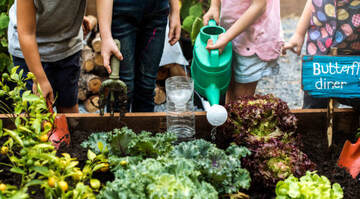
- Students will be growing vegetables in our garden and in containers in the classroom. Students will harvest, wash, cut up and prepare the food for eating raw (carrots) or cooking them and sharing with the classroom.
- Students will learn how to run a food drive and collect non perishable items for the food shelf.
- Students will be making food for their family: breads, pastries, etc.
your child to show that you are appreciative of the work they put into what they made for you, and comment on the
thoughtfulness and taste (choose positive words).
"The Environment must be rich in motives which lend interest to activity and invite the child to conduct his own experiences."
Maria Montessori
Maria Montessori